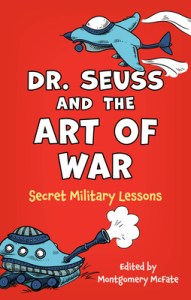
This book looks silly but it’s actually extremely interesting. My favourite Librarian-in-Chief suggested it, so of course I loved it!
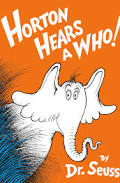
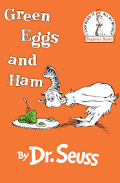
Children in the US (I don’t know about other countries) are very familiar with Dr. Seuss’ stories, like The Cat in the Hat, Horton Hears a Who, Green Eggs and Ham, and Yertle the Turtle. These books are filled with weird characters, bright colours, imaginary animals, and silly stories that rhyme:
I know I’ll have trouble.
I’ll, maybe, get stung.
I’ll always have trouble.
I’ll, maybe, get bit
By that Green-Headed Quail
On the place where I sit.
Or
Don’t give up! I believe in you all!
A person’s a person, no matter how small!
And you very small persons will not have to die
If you make yourselves heard! So come on, now, and TRY!
Children and adults in the US have memorized passages from these books, the same way French children and adults have memorized passages from the Fables de La Fontaine.
The authors of this book take these fun stories, written by Theodor Geisel after WWII, and link them to actual military beliefs, practices, or strategies. During WWII, Geisel enlisted and served in the « movie industry that supports soldiers, » which could also be called « propaganda office » or « information office » today. He helped create short films that taught soldiers how to behave, promoted the American spirit, and identified who the « enemy » was. After the war, he started writing these children’s books, and it’s easy to see parallels between his Dr. Seuss stories and his military knowledge and experience during the war and the principles and practices of war.
Every chapter of the book is based on one story and one military-related topic, like The Cat in the Hat and Cyber Warfare, and Horton Hears a Who and International Human Rights Laws, and Hunches in the Bunches: Intelligence and National Security Decision-Making (my favourite chapter), and Horton and the Kwaggerbug and Deception in International Relations. The different authors of these chapters look at a few passages from the story and build on them to explain different aspects of a specific concept such as unity of forces, politicization, torture, anti-authoritarianism, offense-defense balance, resilience, frame resonance, mass protests, first-and second-order effects, trauma, arms race, signal/noise problems, etc. Theodor Geisel seems to have written these stories to warn children about the dangers of war, to show the importance of kindness and critical thinking and resistance to a higher power, and to atone for the racist messaging he helped propagate during the war.
Honestly, it’s fascinating! I have learned so much about the military world, the theories, the issues, the history, the practice, the way they understand the world, the strategies, the consequences… I should have read this book when I first got my job here, four years ago! It also makes me want to read Dr. Seuss’ stories, now, and to read these seemingly innocent stories to kids, knowing full well what these stories really represent!



Donald Rumsfeld (2002): « There are known knows. […] We also know there are known unknowns. […] But there are also unknown unknowns. »


 Bouquins et musique
If I met some children’s books by Roald Dahl, before reading your new billet, I had never heard about Dr Seuss books. By the way, nowadays in my country, children hardly ever have fables to memorise and they seldom have an essay to write too, which is both stupid and awfully sad.
J’aimeJ’aime
I am not surprised that no one memorizes anything anymore, or write. It’s the same here. Education is going through a major crisis and it’s not fun 😦
J’aimeJ’aime
Why should we worry about education? Haven’t we recently heard there are lots of well-known people in power who don’t mind it?
J’aimeJ’aime
True, very true. I hope I won’t lose my job until I can retire though, still 8 years to survive…
J’aimeJ’aime